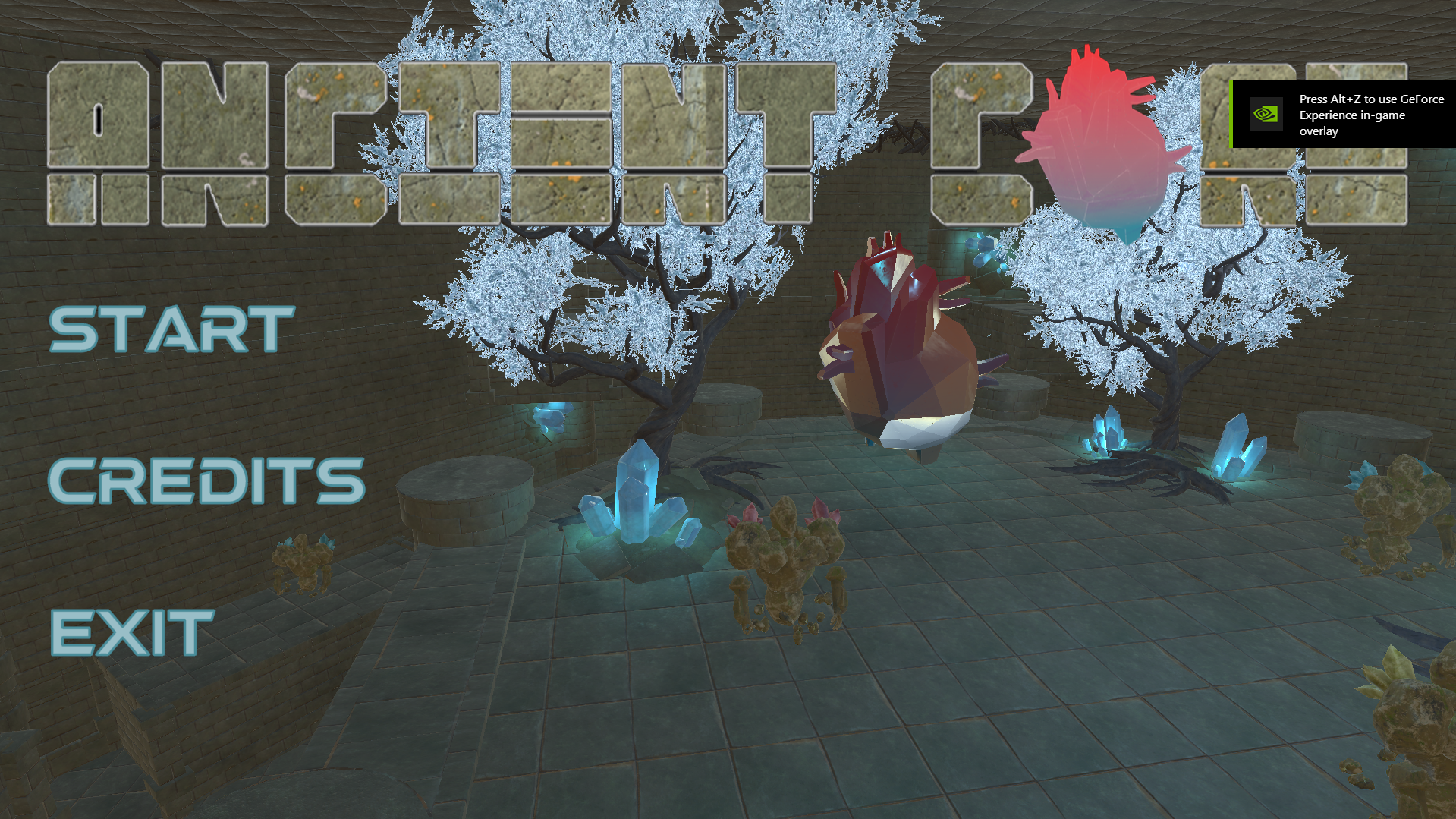
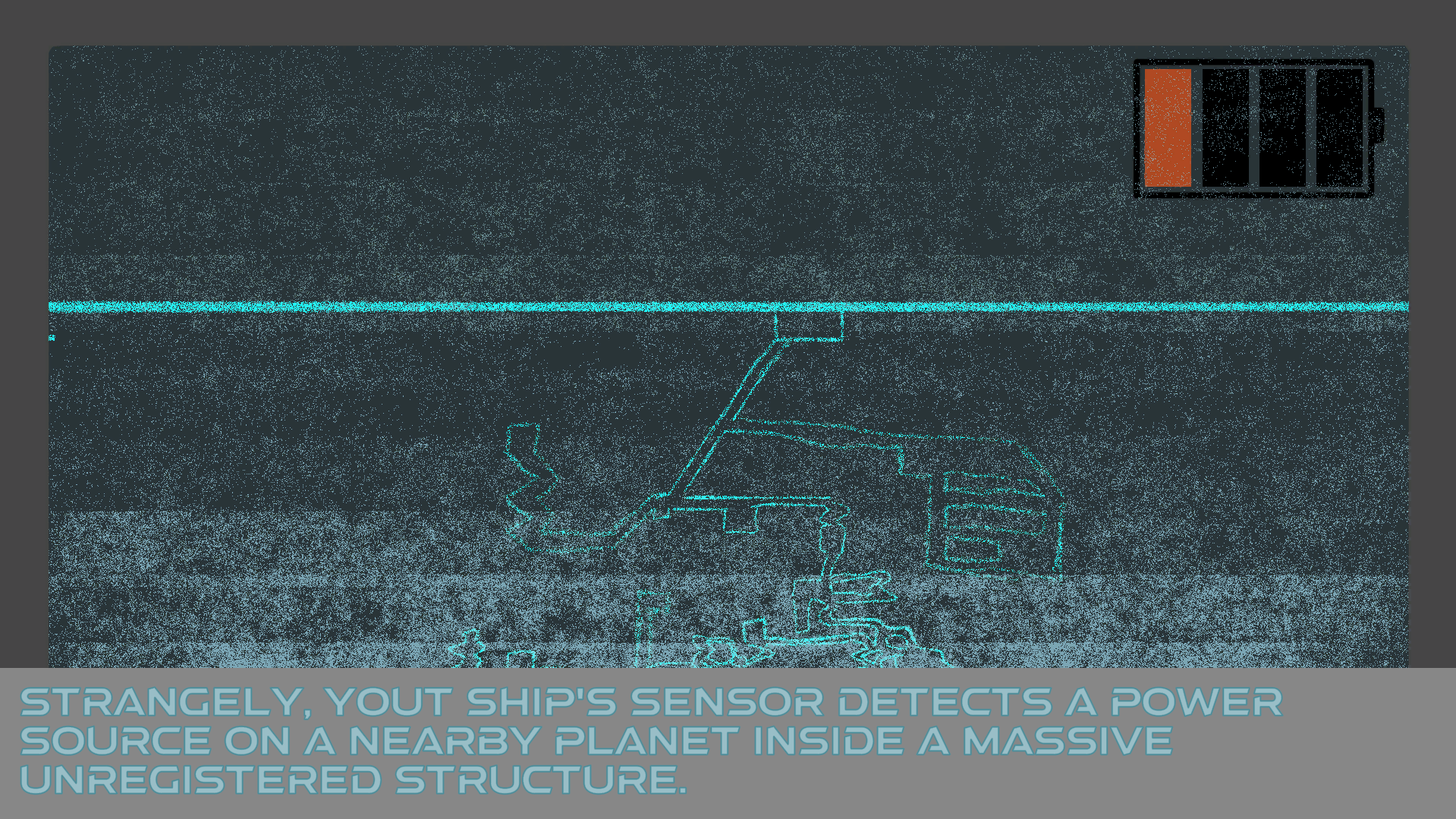
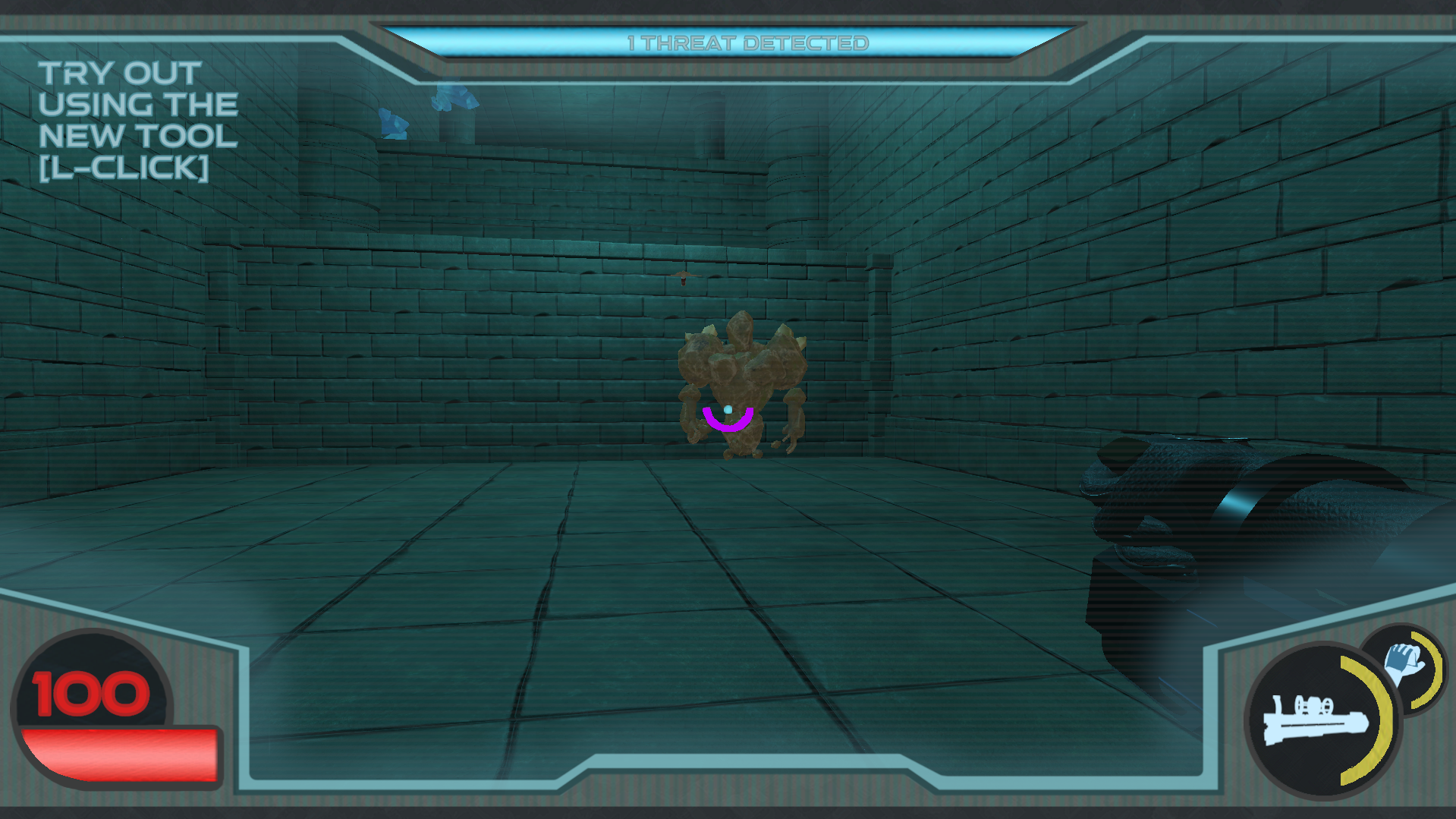
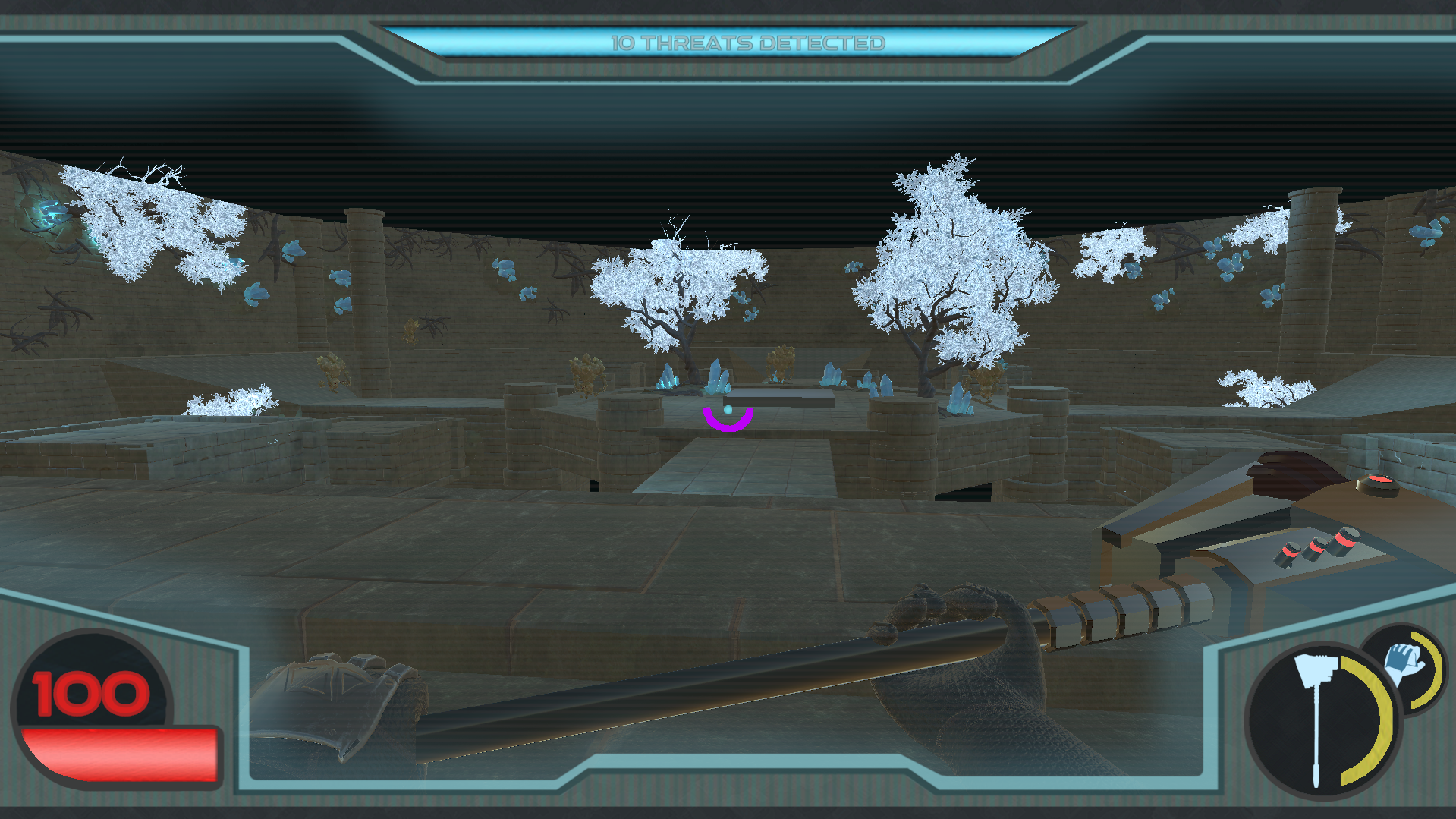
Ancient Core is a short, first-person platform run-and-gun game where you play as a traveling interstellar engineer for the SSF Marathon ship that is on its way to a nearby colony planet, AN-77. After your ship deviates from its course and suffers major power outages from a wormhole, you take a drop pod and crash-land alone in the ruins of an abandoned planet to retrieve a power source to restore the ship’s power and return on course. Mysterious sentient rock guardians, disturbed by the crash landing, stand in your way to prevent you from completing your mission. Thankfully, your nano multitool bangle, MIMIC MK.3, can scan objects to alter its composition to mimic them with weak molecular integrity. Play it yourself here
Ancient Core was developed by Population Zero Studio, a twelve-member team of junior developers in Champlain College’s Game Studio program. The project was created over the course of a semester as part of the Game Studio II curriculum. Our team name, Population Zero, was chosen because we had no dedicated character artist, a challenge that shaped our collaborative approach throughout development. The team was composed of five Designers, four Artists, a Producer, a Programmer, and a Sound Designer.
Enemy Design
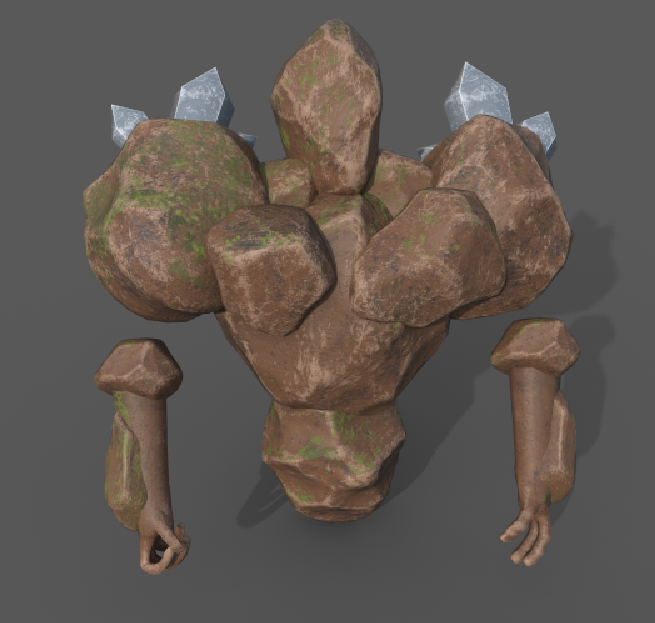
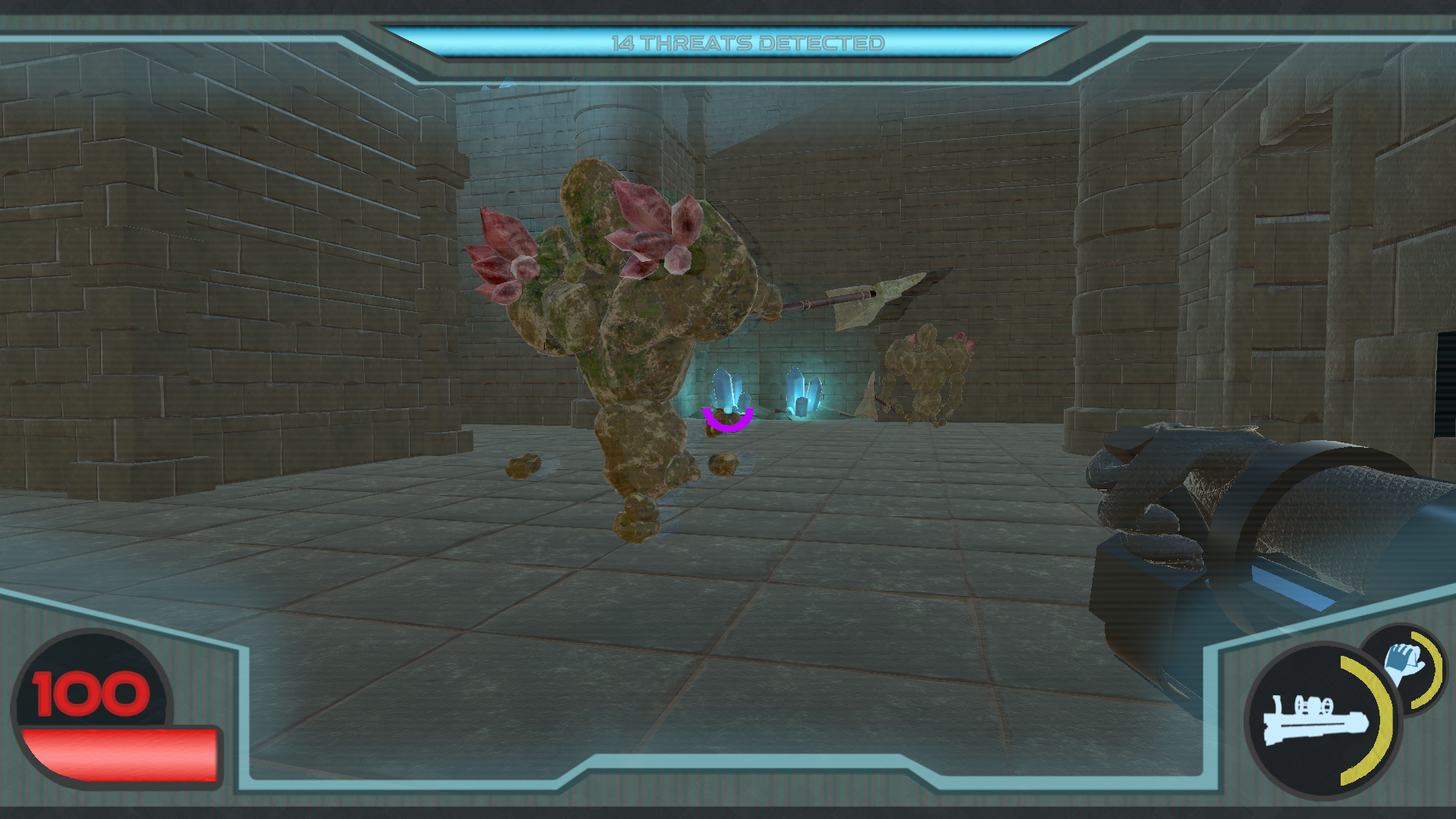
During this project, I was responsible for designing the game’s enemies, sentient rock guardians that inhabit the ancient temple the player explores. A core mechanic allows players to pick up the same weapons used by these enemies and convert them into sci-fi variants using a multitool bangle. This created a unique design challenge: each weapon needed to feel engaging and satisfying both when wielded by the player and when used against the player by the enemies.
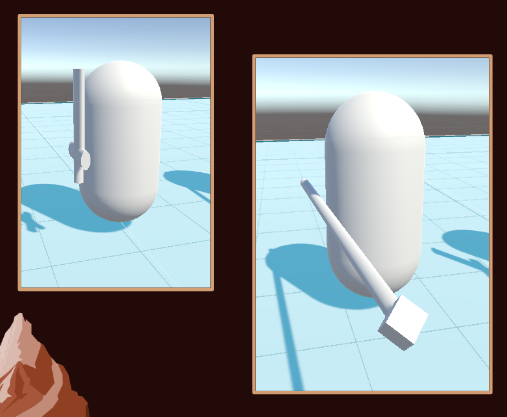
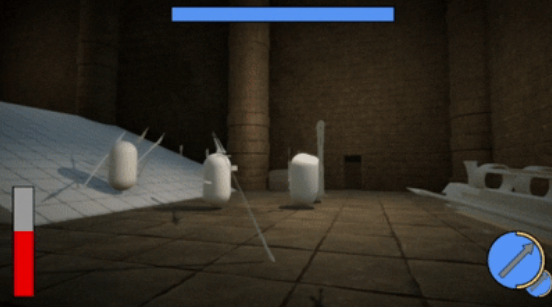
To address this, we developed three distinct weapons: the Sword, Spear, and Hammer. With the relationship between player weapons and enemy weapons established, I designed enemy behaviors around these tools. The Sword Guardian closes the distance quickly and strikes with a forward-lunging slash. The Spear Guardian maintains mid-range positioning and attacks by throwing spears. The Hammer Guardian advances toward the player before performing a wide, spinning attack to control space and apply pressure.
While the concepts were strong, implementing them posed challenges, particularly because we lacked a dedicated animator. Our Enemy Artist, Coleman FitzGerald, and I worked closely throughout development to ensure that the animations he created could be integrated smoothly into the engine and function as intended during gameplay.
Game Postmortem
This project marked our first major development effort at Champlain College. While we had previously completed Game Studio I, those projects involved larger teams but significantly shorter timelines, and they didn’t fully reflect the scale and expectations of this course. Like any substantial project, this one came with its share of challenges.
Team Size was our first major hurdle. None of us had worked in a twelve-person team before, and coordinating that many developers introduced version-control issues and frequent merge conflicts. To improve communication and workflow, we implemented a check-in/check-out system: team members would log what they were working on when they began and report back when they finished. This helped us avoid overlap, reduce conflicts, and maintain an accurate record of working hours.
Our second challenge was the absence of a character artist, which ultimately inspired our team name, Population Zero. This gap significantly influenced the direction of the project. Since our artists specialized in 3D work, we were committed to creating a 3D game, but without a character artist, we had to rethink our approach. The result was a first-person experience that required no visible player character. Enemy designs were intentionally created with minimal rigging and animation requirements, no faces, arms, or legs, allowing our Enemy Artist to produce functional assets efficiently and giving me room to iterate on enemy behavior and implementation.
Our final challenge was scope management. Early in development, our ideas quickly expanded into a game far too large for a single semester, with concepts such as numerous weapon types, extensive power-up systems, and a long list of levels. Like many teams new to long-form projects, we had to learn to scale back. By refining our goals, we narrowed the design to three core weapons and five levels, creating a focused experience that fit within our timeframe while still supporting meaningful gameplay.
Production Team
Designers
Dylan Wilcox – Lead Designer & Level Designer
Isaac Roy – Movement Designer
Fable Spagat – UI Designer & Product Owner
Max Siegman – Combat Systems Designer
Artists
Coleman FitzGerald – Lead Artist, Enemy Artist, & VFX Artist
Jason Richter – Environment Artist
Heirloom Luong – Weapon Artist
Other Developers
Olivier Lorin - Producer
Dawson Jackson - Programmer
Curtis Rutherford - Sound Designer