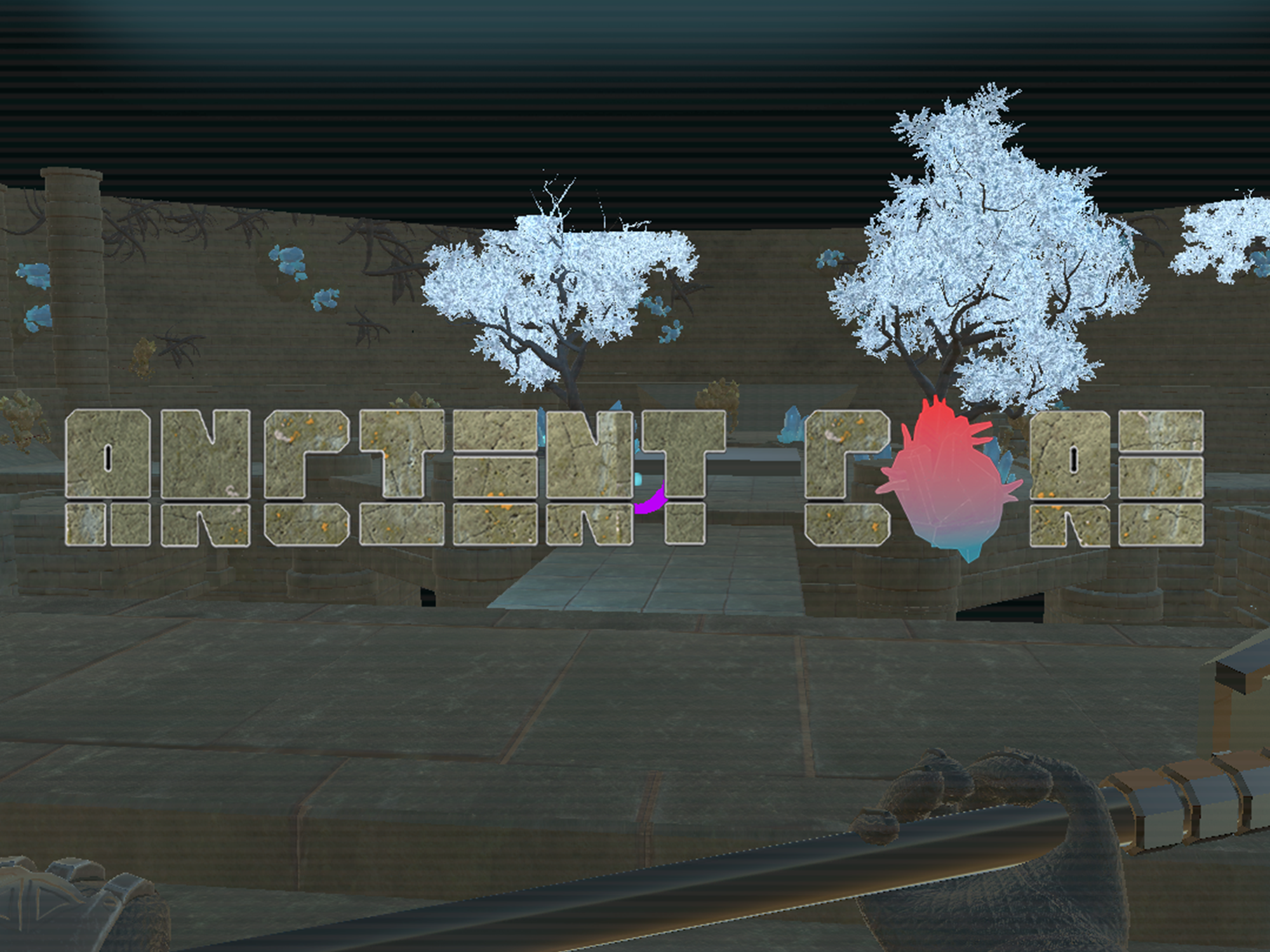
In Pick Some Axe, a 3D platformer from Chopping Block Studios, play as Joe Miner, a man whose beloved Jasper has been kidnapped by evil rock monsters. Armed with his trusty pickaxe, Joe can take out his foes with mighty swings and dig through the ground to reach any nook or cranny. By fighting monsters, finding Jasper's keepsakes, and exploring the world beneath the Earth, Joe will stop at nothing until his beloved is rescued! Play it for yourself here
Pick Some Axe is a game developed by a 12-person team for our Capstone project. The game was a year-long project over the course of our senior year at Champlain College.
Camera Work
My proudest work on Pick Some Axe was on the camera. During the beginning of production, I tried to create an on-rail camera system to control the player's perspective using trigger boxes and transitions to allow for freedom with the player's movement while also controlling where the player could go. This turned out to be a big mistake, and it was scrapped. We decided it was too much scope to implement. It also clashed with our vision of large exploration.
The next system I implemented was a typical 3D camera system, like in most platformers, using Cinemachine. Cinemachine had one flaw that I had to solve: the built-in camera collider often clips through walls, which was jarring for players. So using their API, I created a custom collider. It works by casting rays from the player toward the camera, then using the hit data, it pulls the camera closer to the player. This avoids the issues with the Cinemachine collider and provided an interesting challenge.
Although the on-rail system did not work, I used the knowledge I gained about Cinemachine's dolly tracks to create a new system. In our first level, The Mines, we have a sequence that opens into a large cavern, so I used the dolly track to take control of the camera and gave the players a view of the cavern while still giving them control of the character. Many people disliked the system, so it too got scraped.
But the dolly tracks survived, and led to my favorite part of the game: the cutscenes. It started by converting the cavern sequence into a cutscene, fully taking control away from the player and showing the player the grand scene of the cavern. Testers loved the new cutscenes. So I implemented more, and more, and more. The cutscenes transformed from just visual ways to show off the levels to tools used to provide information to the player. It's used for burning bramble in The Groves and the dynamite plungers in The Mantle.
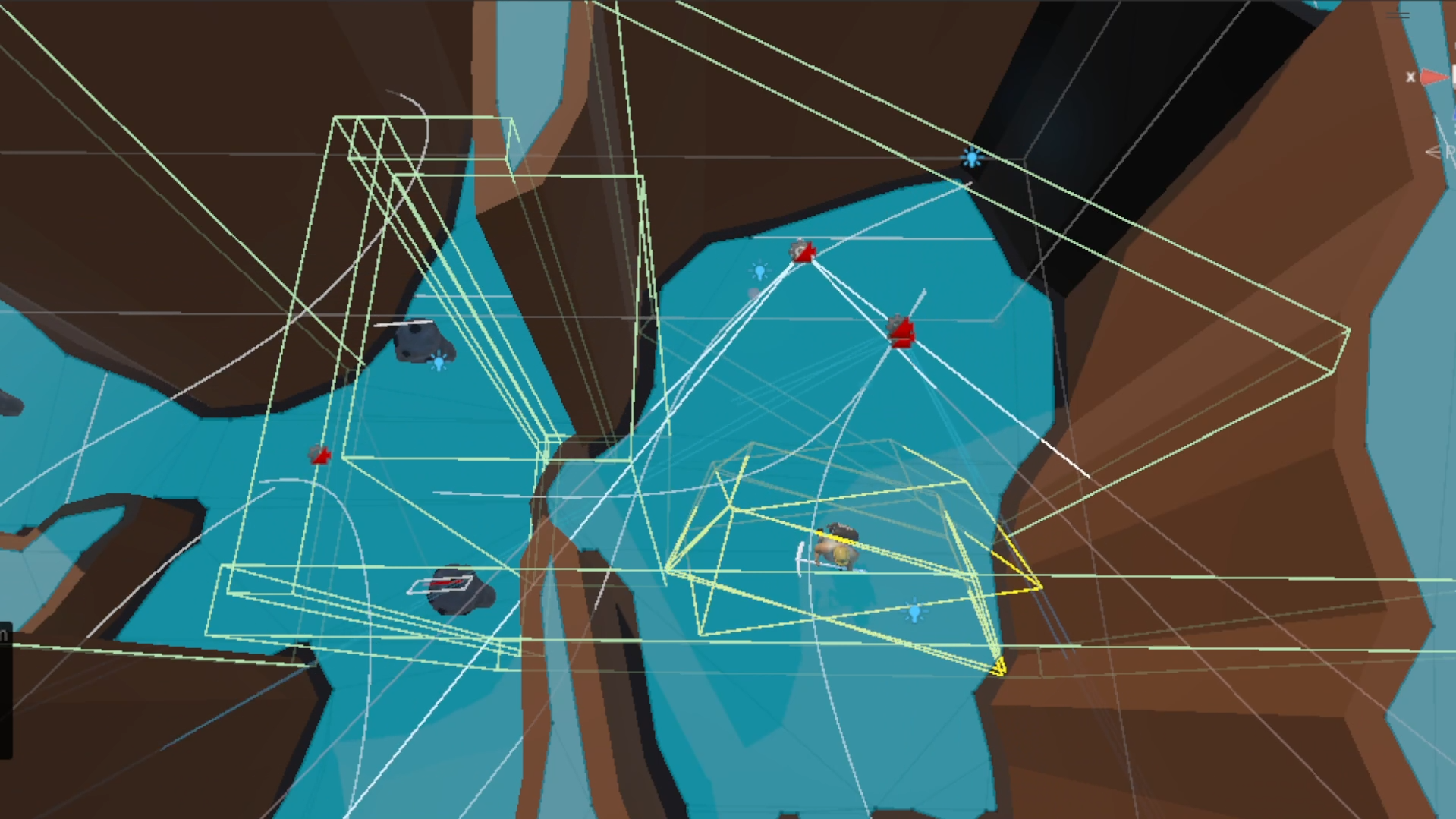
On Rail Camera for regular gameplay
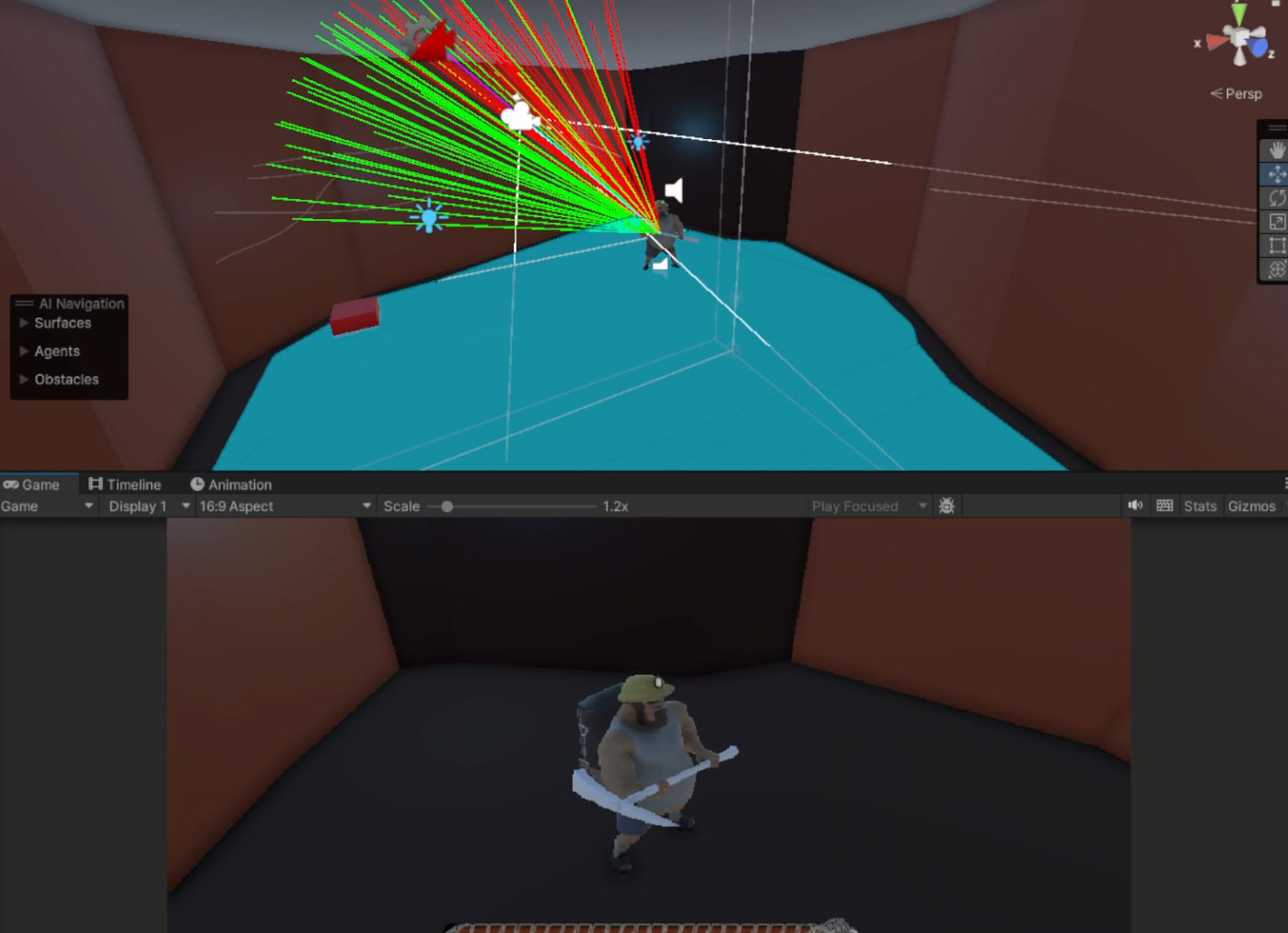
Final third person Camera with custom collider
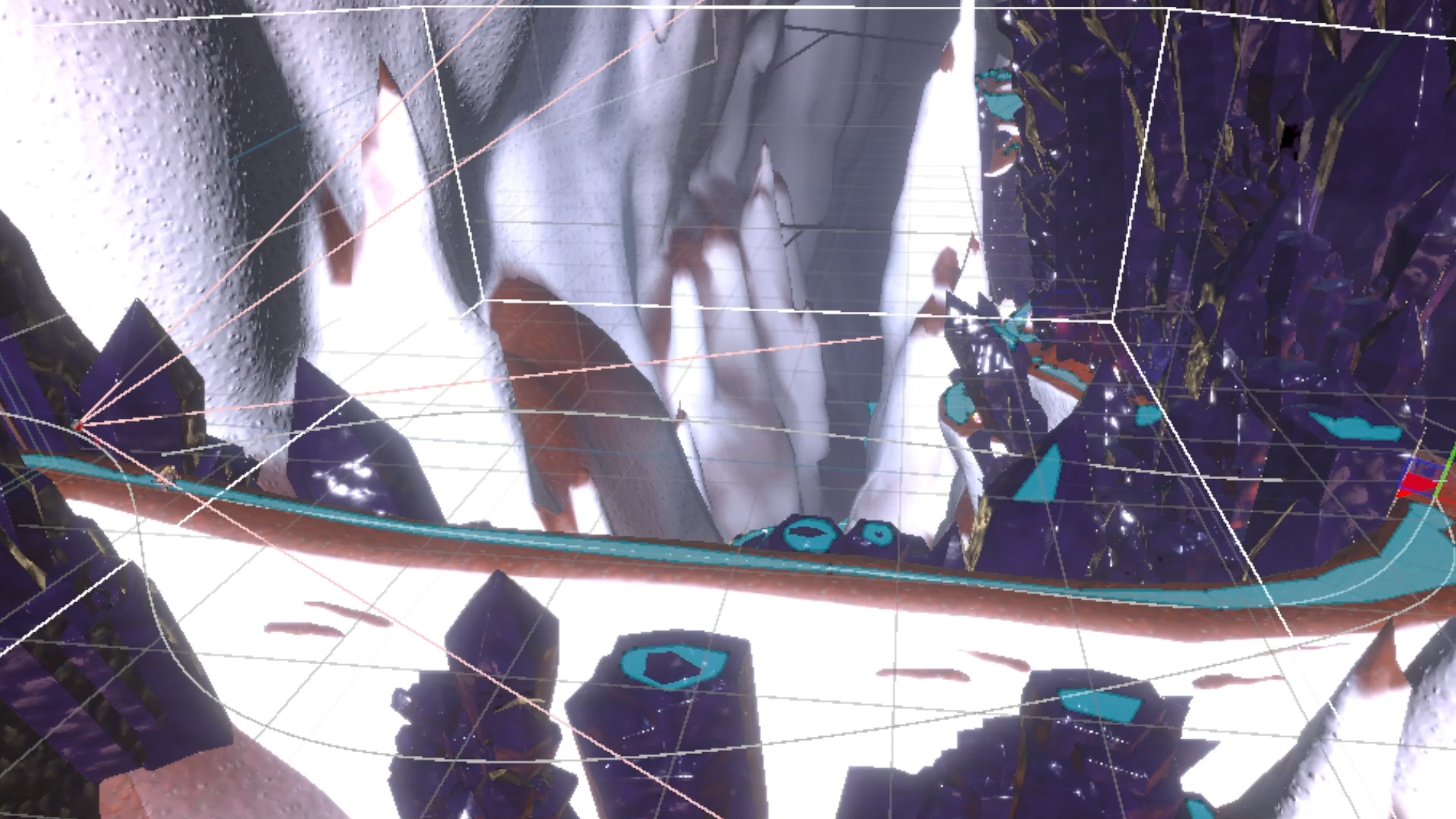
Cinematic Camera System
FMOD
I also did a lot of work implementing sounds in our game. Working with our sound designer, who implemented the sounds in FMOD Studio, I focused on the in-Unity implementation. I struggled a lot with learning FMOD, spent many hours researching, attempting to implement, and then went back to research. Eventually, I got it working, implementing music for each level, combat music, and sound effects.
Chopping Block Studio Team
Alexander Cowell - Systems and Boss Design
Bobby Hicks - Design Lead
Dylan Wilcox - Level Design
Isaac Roy - System Design
Steven Bruns - System/Narrative/Level Design
Rayna Tubbs - Sound Lead and Composer
Jason Richter - Environment and Prop Artist
Harrison Green - Art Lead and Product Owner
Andrew Zitnik - Animation and Character Artist
Atticus Clark - Systems and UI
Ryan Boehm - Programming Lead
Elara Spiller - Producer and Scrum Master
Bobby Hicks - Design Lead
Dylan Wilcox - Level Design
Isaac Roy - System Design
Steven Bruns - System/Narrative/Level Design
Rayna Tubbs - Sound Lead and Composer
Jason Richter - Environment and Prop Artist
Harrison Green - Art Lead and Product Owner
Andrew Zitnik - Animation and Character Artist
Atticus Clark - Systems and UI
Ryan Boehm - Programming Lead
Elara Spiller - Producer and Scrum Master